名人名言英语翻译不仅是语言转换的过程,更涉及文化内涵、语境适配和思想精髓的传递,优秀的翻译能让跨越时空的智慧在不同语言文化中焕发生机,而机械直译则可能让名言失去原有的力量与韵味,以下从翻译原则、经典案例解析及实用技巧三个维度展开探讨,帮助更精准地理解和翻译名人名言。
名人名言英语翻译的核心原则
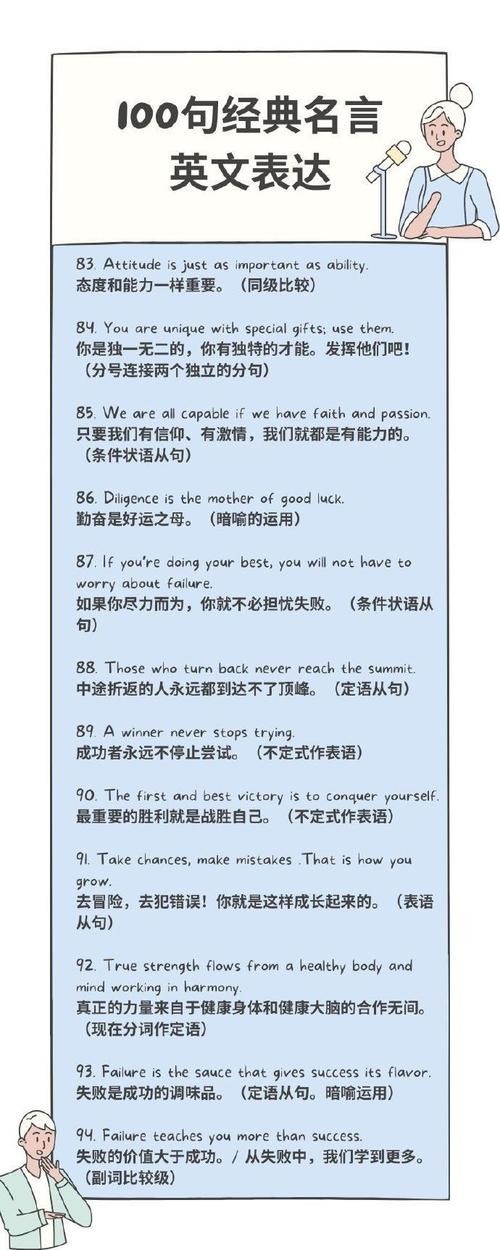
名人名言的翻译需兼顾“信、达、雅”三大标准,同时结合名言的文体特征和语境背景进行调整。
(图片来源网络,侵删)
- 忠实原意,避免曲解:名言往往承载着作者的核心思想,翻译时需优先确保语义准确,孔子“知之者不如好之者,好之者不如乐之者”若直译为“He who knows is not better than he who loves, he who loves is not better than he who is happy”,虽传达了基本意思,但“乐之者”的深层含义“以……为乐”未被凸显,更贴切的翻译是“To know is not as good as to love; to love is not as good as to enjoy”,enjoy”精准对应了“乐”的愉悦与沉浸感。
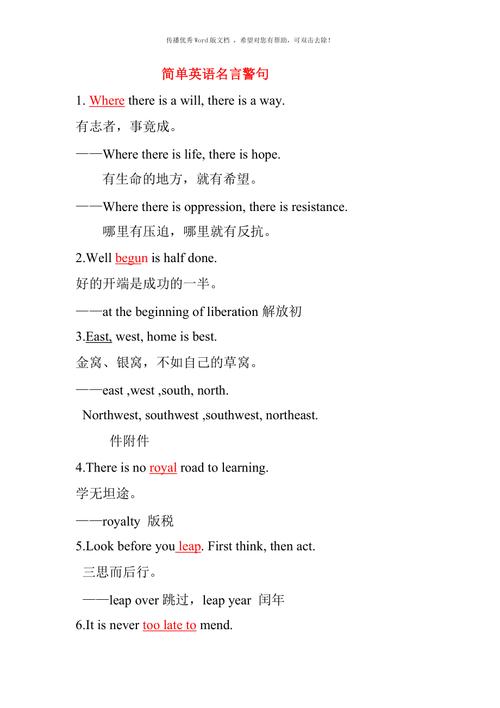
- 文化适配,弥补语境差异:不同文化背景下的比喻、典故可能存在理解障碍,中国谚语“世上无难事,只怕有心人”,若直译为“There is nothing difficult in the world, only people who are afraid of difficulties”,虽语法正确,但失去了中文的凝练,英文中对应的名言是“Where there's a will, there's a way”,两者思想高度契合,翻译时借用英文现成表达能更自然传递内涵。
- 保留修辞,兼顾韵律:名言常运用对仗、排比等修辞,翻译时若能保留形式美感,能增强感染力,比如鲁迅“横眉冷对千夫指,俯首甘为孺子牛”,若译为“Frowning coldly at the thousand fingers, I bow my head willing to be an ox for the children”,虽保留了“千夫指”和“孺子牛”的意象,但对仗感较弱,许渊冲的译本“With frown I coldly face the thousand fingers; With head bowed low, I'm willing to serve the children”通过“frown”与“bowed low”、“coldly”与“willingly”的对比,更贴近原诗的节奏与张力。
经典名言翻译案例解析
通过不同类型名言的翻译对比,能更直观理解翻译技巧的运用,以下为部分常见案例:
| 原文(中文) | 常见直译 | 优化翻译 | 翻译解析 |
|---|---|---|---|
| 天行健,君子以自强不息 | Heaven's movement is vigorous, a gentleman should strive for self-improvement constantly | Heaven's movement is ever vigorous; A gentleman strives ceaselessly to strengthen himself | “ever vigorous”强化了“健”的持续性;“strive ceaselessly”比“strive constantly”更具行动力,贴合“自强不息”的主动精神。 |
| 人生如逆旅,我亦是行人 | Life is like a reverse journey, I am also a passerby | Life is but an inn, and I a passing guest | “逆旅”在古文中指“旅店”,直译“reverse journey”易生歧义,译为“inn”更准确;“passing guest”比“passerby”更富文学性,呼应苏轼原文的豁达。 |
| 读万卷书,行万里路 | Read ten thousand books, travel ten thousand miles | Read ten thousand books and travel ten thousand miles; The more you see, the more you learn | 前半句保留对仗,后半句补充隐含寓意,符合英文表达习惯,避免“万”字直译带来的夸张感。 |
| 不飞则已,一飞冲天 | If not flying, then already; once flying, soaring to the sky | If it does not fly, it stays on the ground; once it flies, it soars to the heights | 将“已”译为“stays on the ground”补充了隐含的对比,“soars to the heights”比“soaring to the sky”更具动态画面感。 |
实用翻译技巧
- 结合上下文理解关键词:同一词汇在不同语境中含义不同。“仁”在孔子思想中核心为“benevolence”或“humaneness”,但“仁者爱人”更适合译为“A benevolent man loves others”,突出“爱”的实践性。
- 灵活处理文化负载词:对于具有特定文化背景的词汇,可采用“直译+注释”或意译,如“中庸之道”若译为“the way of medium”,外国读者难以理解,更佳译法是“the doctrine of the mean”(西方哲学中已有对应概念),或补充解释“the middle way, avoiding extremes”。
- 借鉴英文名言的表达习惯:当中文名言与英文谚语意义相近时,可直接借用英文现成表达,实现“功能对等”。“早起的鸟儿有虫吃”对应英文“The early bird catches the worm”,无需直译“早起的人”为“early person”。
相关问答FAQs
Q1:翻译名人名言时,是否必须严格遵循原文的句子结构?
A1:不必完全拘泥于原文结构,但需保留核心逻辑和修辞特点,中文多用短句,英文偏好长句复合结构,可将短句合并为复合句,同时通过连词(如but, yet, therefore)体现逻辑关系,关键是“意合”而非“形合”,确保读者能感受到与原文一致的思想脉络和情感色彩。
Q2:如何判断名言翻译的优劣?
A2:优质翻译需满足三个标准:一是准确性,不偏离原意;二是可读性,符合目标语言的表达习惯,让读者自然理解;三是感染力,保留原文的思想深度和情感张力,可通过对比多个译本、查阅权威资料(如《名人名言词典》)、咨询母语者等方式验证,同时注意不同语境下的适用性——例如学术文本需严谨,文学文本可适当发挥。
(图片来源网络,侵删)