“名言的英语怎么写”这一问题看似简单,实则涉及语言转换中的文化内涵、语境适配和表达准确性,在英语中,“名言”对应的词汇主要有“famous saying”“proverb”“quotation”等,但具体使用需根据名言的类型、来源和语境灵活选择,同时需兼顾翻译时的文化传递与语言美感。
“名言”的英语表达:核心词汇辨析
英语中描述“名言”的词汇并非完全等同,需根据其属性细分:
-
Famous Saying / Well-known Saying
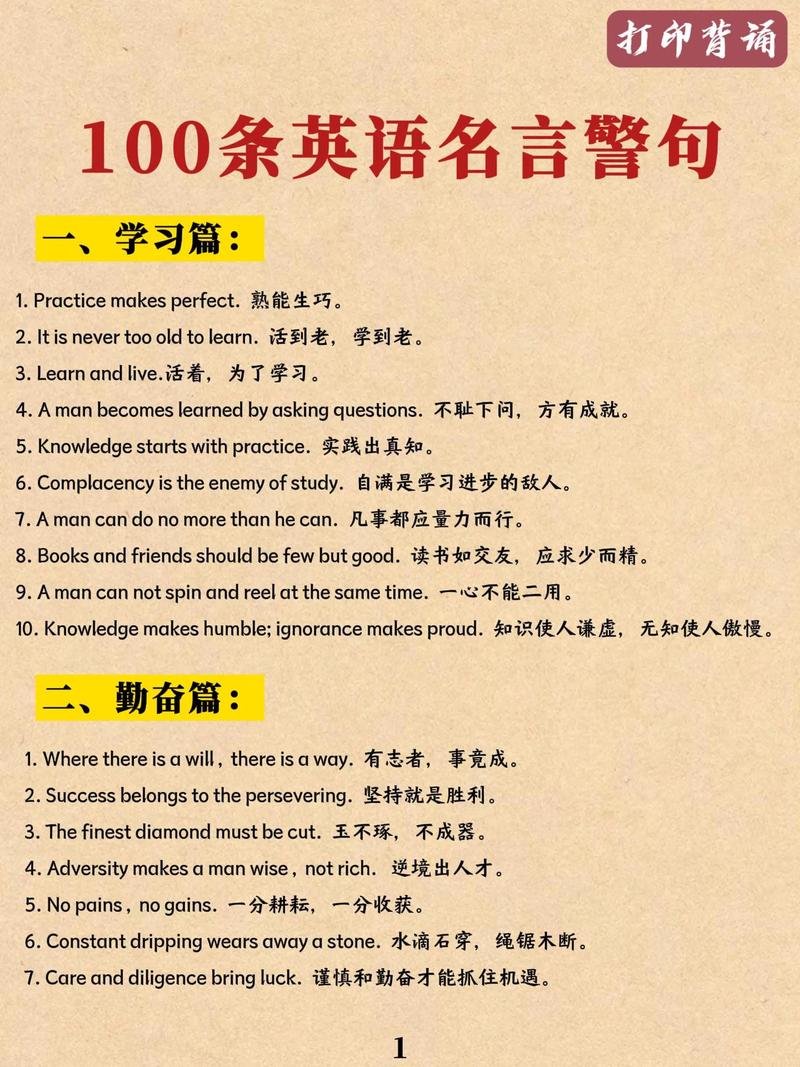
这是最直译的“名言”,泛指广为人知、具有启发性的话语,孔子的“学而时习之,不亦说乎”可译为“Is it not a pleasure to learn and practice what you have learned from time to time?”,作为“famous saying”时,可补充说明“a famous saying from Confucius”,这类表达侧重“知名度”,适用于古今中外被广泛传播的经典话语。 -
Proverb(谚语)
特指民间流传的、反映生活经验或朴素哲理的短句,通常简练押韵,具有口语化特征。“慢工出细活”对应“Slow and steady wins the race”,“早起的鸟儿有虫吃”是“The early bird catches the worm”,谚语的核心是“集体智慧传承”,翻译时需保留其比喻结构和通俗性,而非字对字直译。 -
Quotation(语录/引言)
多指特定人物(如名人、作家、思想家)在特定场合所说的话,强调“出处”和“真实性”,莎士比亚的“生存还是毁灭,这是一个问题”标准译本是“To be or not to be, that is the question”,作为“quotation”时需注明“from Shakespeare's Hamlet”,这类表达常见于学术引用、演讲或书籍中,需确保来源准确。 -
Maxim(箴言/格言)
指具有指导意义的、凝练的道德准则或行为规范,通常更正式、抽象。“己所不欲,勿施于人”可译为“Do as you would be done by”,作为“maxim”时,可强调其“道德训诫”的属性,常见于哲学或伦理学文本。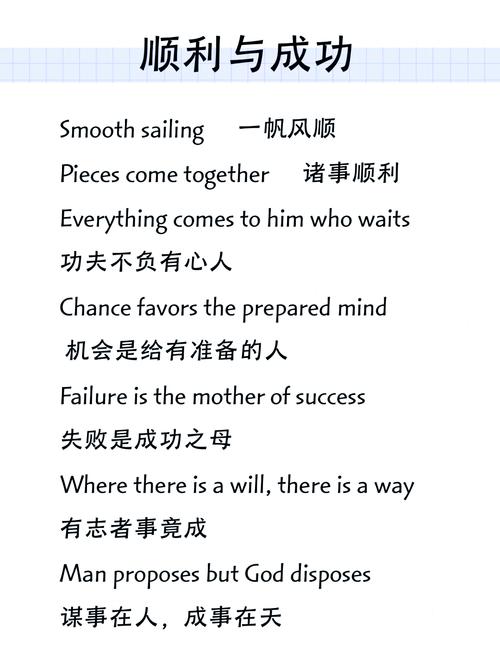 (图片来源网络,侵删)
 -
Aphorism(警句)
指言简意赅、揭示深刻真理的短句,常带有讽刺或哲理性,风格犀利,王尔德的“生活就是悲剧,而我看清了这一点”是“Life is too important to be taken seriously”,作为“aphorism”时,突出其“精辟与洞察力”。
翻译名言时的关键考量:从“形似”到“神似”
将中文名言译为英语时,需避免“字对字”的机械翻译,需兼顾以下维度:
文化内涵的适配性
中文名言常蕴含中国特有的文化背景(如儒家思想、历史典故),翻译时需补充文化语境或转换比喻。“画蛇添足”直译为“draw a snake and add feet”会让英语读者困惑,需意译为“gild the lily”(给百合花镀金,英语中“多此一举”的地道表达),或保留直译并解释“an act of superfluousness that ruins the effect”。
语境与功能的匹配
名言的使用场景(如演讲、写作、日常对话)决定翻译风格,毛泽东“为人民服务”在官方文件中译为“Serve the people”,简洁有力;而在文学作品中,可译为“to dedicate oneself to the service of the people”,更具感染力,日常交流中引用“失败是成功之母”,用“Failure is the mother of success”即可,无需冗长修饰。
语言节奏与美感
中文名言讲究对仗、押韵,英语翻译也需追求韵律和节奏感。“山重水复疑无路,柳暗花明又一村”,许渊冲译为“Where there's a winding path, there's a doubt of no way out; where there willows and flowers bloom, there's another village ahead”,通过“doubt”与“out”、“bloom”与“village”的半押韵,保留原诗的意境流动感。
不同类型名言的翻译示例(表格对比)
| 中文名言 | 英文直译 | 文化适配翻译 | 类型 |
|---|---|---|---|
| 温故而知新 | Review the old and know the new | Learning from the past, one acquires new knowledge | Famous Saying |
| 入乡随俗 | Enter a village, follow its customs | When in Rome, do as the Romans do | Proverb |
| 天行健,君子以自强不息 | Heaven's movement is powerful; the gentleman strives ceaselessly | The heavens move vigorously; the gentleman strives unceasingly to improve himself | Maxim |
| 书山有路勤为径 | In the mountain of books, diligence is the path | In the mountain of books, diligence is the path; in the sea of knowledge, hard work is the boat | Aphorism |
相关问答FAQs
Q1:为什么“名言”不能全部译成“famous saying”?
A:“Famous saying”仅强调“知名度”,而中文“名言”包含“哲理深刻、语言凝练”的内涵。“proverb”特指谚语(民间经验),“quotation”强调人物言论的出处,“maxim”侧重道德规范,若将“Slow and steady wins the race”(谚语)译为“famous saying”,会丢失其“民间智慧”的属性;将莎士比亚名言译为“famous saying”则弱化了其“权威出处”的文化分量,需根据名言的来源、形式和功能精准选择词汇,才能准确传递其文化价值。
Q2:翻译中文典故类名言(如“塞翁失马”)时,如何平衡直译与意译?
A:典故类名言需“直译+解释”或“意译+文化注解”结合。“塞翁失马,焉知非福”可直译为“The old man on the frontier lost his horse—who knows if it's not a blessing?”,随后补充说明:“This Chinese proverb illustrates that misfortune may turn into good fortune, similar to the English 'Every cloud has a silver lining'”,若语境无需解释(如英语读者熟悉中国文化),可直接意译为“A blessing in disguise”,既保留原意,又符合英语表达习惯,关键是在“文化可理解性”和“语言简洁性”间找到平衡,避免读者因文化差异产生误解。